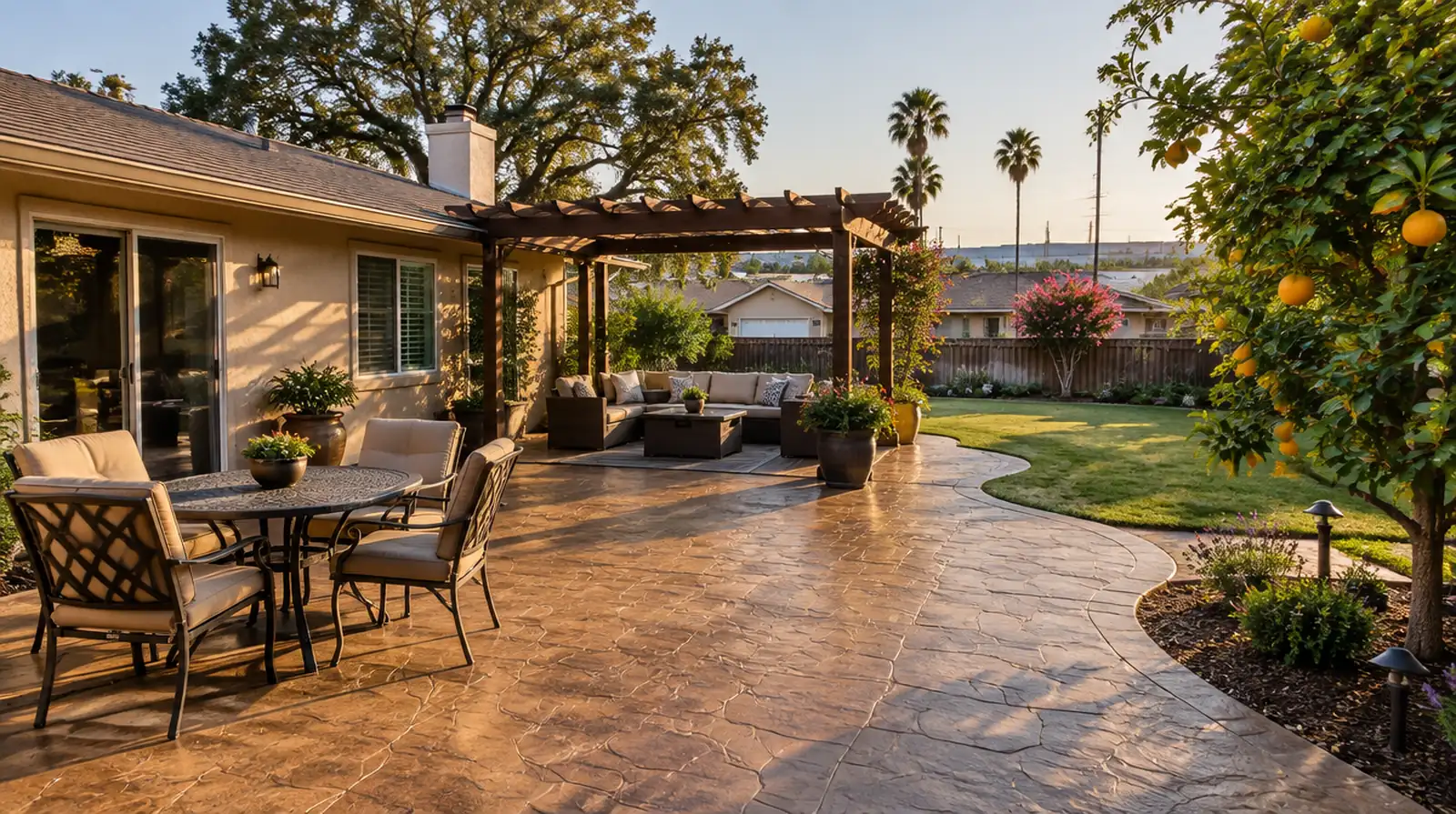
Why outdoor concrete needs protection
Outdoor slabs here deal with intense UV for months on end, then winter rain soaking into dry, porous concrete. Lawn sprinklers hit the same edge of a walkway every morning and leave white mineral deposits. Barbecue grease, fallen fruit from backyard trees, rust from patio furniture and pool chemicals all stain unsealed surfaces. Over time, the surface weathers, color fades and small pits open up. A quality sealer slows all of that down.
Types of sealers
Penetrating sealers
Silane and siloxane sealers soak into the concrete and repel water from within, without changing the appearance or making the surface slippery. They suit driveways, walkways and plain broom-finished patios.
Acrylic sealers
Film-forming acrylics enhance color and add a satin or wet look. They are popular on stamped and colored concrete. They need reapplication every two to three years in strong sun.
Urethane and polyaspartic sealers
For maximum durability on patios and pool decks, we use tougher clear coats that resist abrasion and chemicals. They cost more but last longer.
Our sealing process
Sealing is mostly about cleaning. We pressure wash the surface with hot water and appropriate cleaners, treat oil and rust stains, remove efflorescence and let everything dry completely. Cracks are filled with flexible sealant. Then we apply sealer evenly by sprayer and roller, back-rolling to prevent puddles. On stamped concrete, we can add color-restoring tints before sealing to bring back faded patterns.
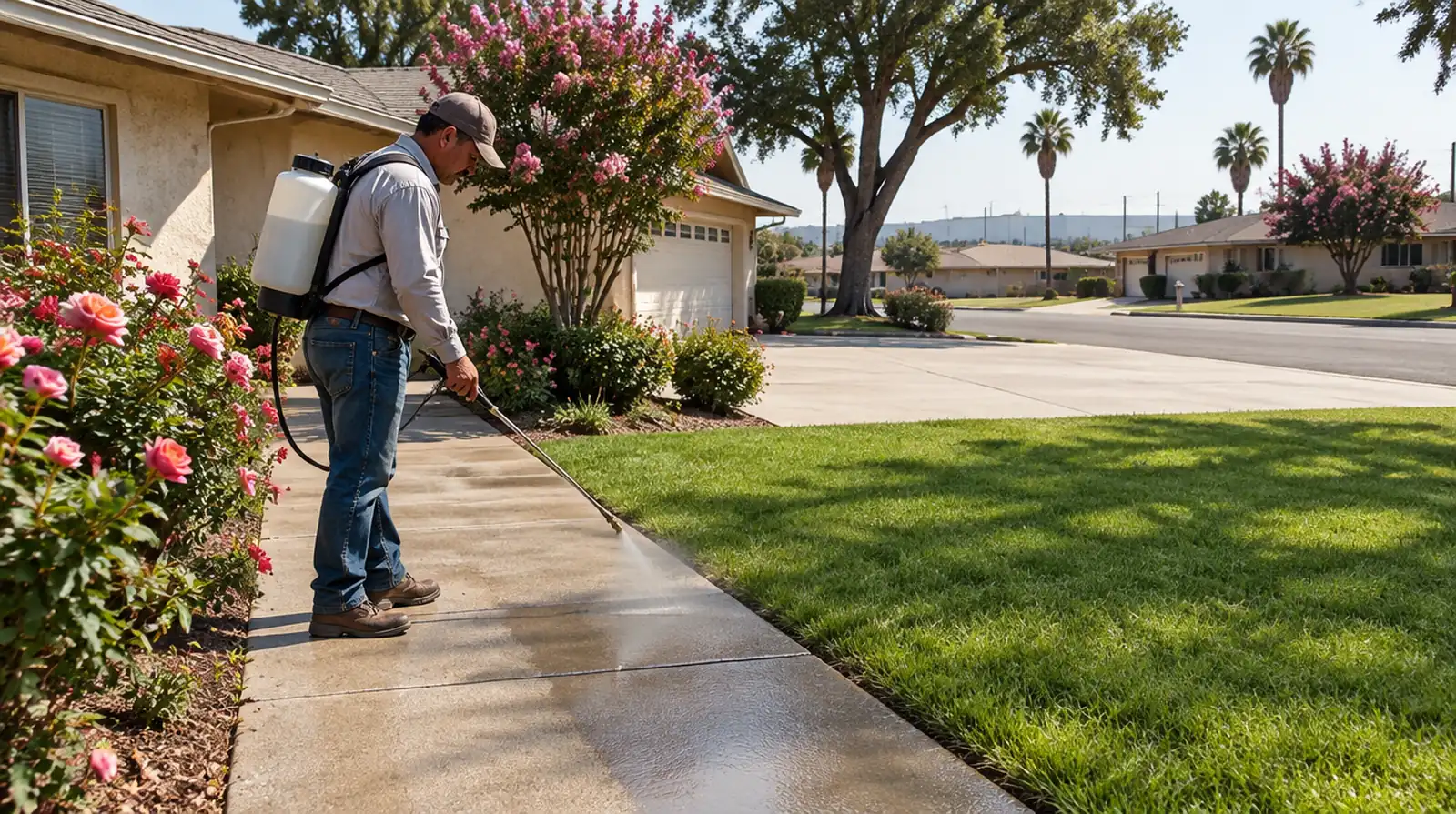
Timing in a hot climate
Applying sealer to a slab baking in afternoon sun causes bubbling, blushing and poor penetration. We seal in the morning or on cooler days, and we watch the forecast for the rare summer thunderstorm or the first winter rain. Sprinkler systems need to be turned off for at least a day before and after.
Pool decks
Pool decks combine sun, water and chlorine. We clean, repair and seal decks with products that resist chemicals and stay cool and grippy underfoot, adding anti-slip additives to film-forming sealers. Properly sealed decks resist algae staining at the coping and are easier to hose off.
Driveways and walkways
Sealing a driveway keeps oil from soaking in and makes cleanup simpler. For drives that are already heavily stained or faded, a full driveway coating might be the better option.
Commercial sealing
Storefront sidewalks, restaurant patios, parking structures and loading docks all benefit from sealing. A clean, sealed entry gives customers a better first impression and reduces maintenance.
How often to reseal
Penetrating sealers last five to ten years. Acrylic sealers typically need recoating every two to three years in this sun. We can set up a reminder for you.
Questions
Will sealer make my patio slippery?
Penetrating sealers do not. Film-forming sealers can, so we add anti-slip grit.
Can you remove old peeling sealer?
Yes. We strip failing acrylic with solvents or grinding before resealing.
How long until I can use the area?
Foot traffic usually within a few hours, vehicles within a day or two.
Schedule sealing
Contact us for a free estimate on your patio, walkway, driveway or pool deck.
Exposed aggregate and stamped work
Exposed aggregate walks and stamped patios were popular when many local homes were remodeled in the 1990s and 2000s. Their texture traps dirt, and their color fades badly in strong sun. Before sealing, we scrub the low spots with stiff brushes so grime is not locked under the new coat. On stamped surfaces, a tinted release or antiquing wash can bring back the shadows in the pattern, giving the patio depth it has not had in years. Sealed aggregate also sheds fewer loose stones underfoot.
Get a sealing estimate
Call (000) 000-0000 for a free estimate.