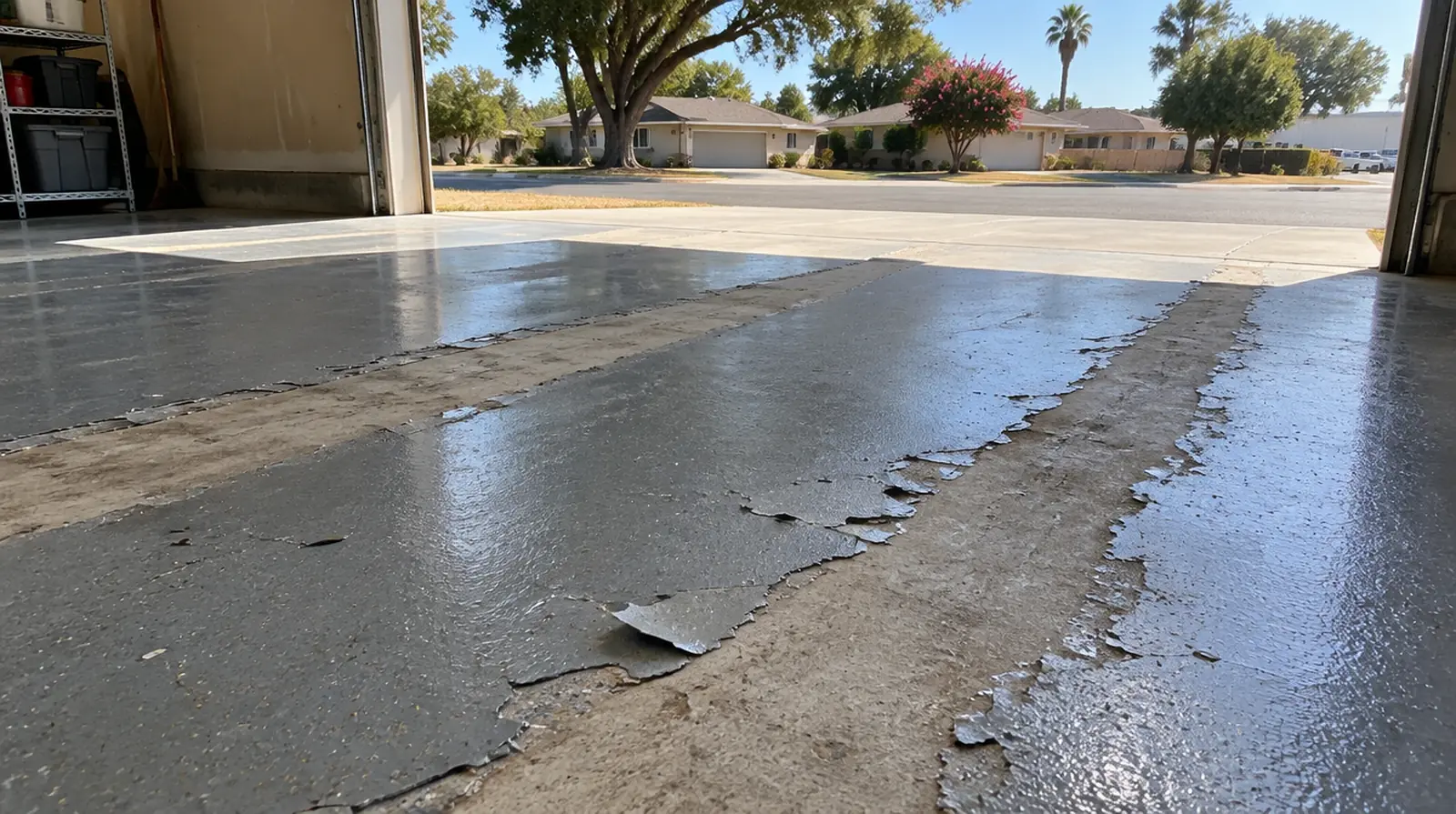
Why coated floors fail
We get a lot of calls from homeowners whose floors were coated only a year or two ago and are already falling apart. The most common causes we see locally:
- Hot tire pickup. Thin coatings soften under hot summer tires and peel off in the tire lanes.
- No grinding. Coatings rolled onto a slab that was only washed or acid-etched never get a real grip.
- Moisture. Vapor rising through the slab, often near irrigation or poor drainage, creates blisters.
- UV yellowing. Standard epoxy turns amber in strong afternoon sun.
- Impact and chemicals. Dropped tools, jack stands and spilled brake fluid chip and stain unprotected films.
Diagnosing before repairing
A patch over a failing coating usually fails too, because the real problem is underneath. So we start with diagnosis. We check adhesion across the floor by tapping and scraping, look at where and how it is failing and take moisture readings. If most of the floor is still solidly bonded, a targeted repair can work. If the coating is lifting everywhere, the honest answer is full removal and a new system.
Repair options
Spot repairs
For small chips, gouges and isolated peeling, we cut back to sound coating, grind the area, fill and recoat. With flake floors we can blend in matching chips so the repair is hard to spot.
Recoat
A floor that is well bonded but dull, scratched or yellowed can be sanded and given a new UV-stable topcoat. It looks almost new for a fraction of the cost of replacement.
Remove and replace
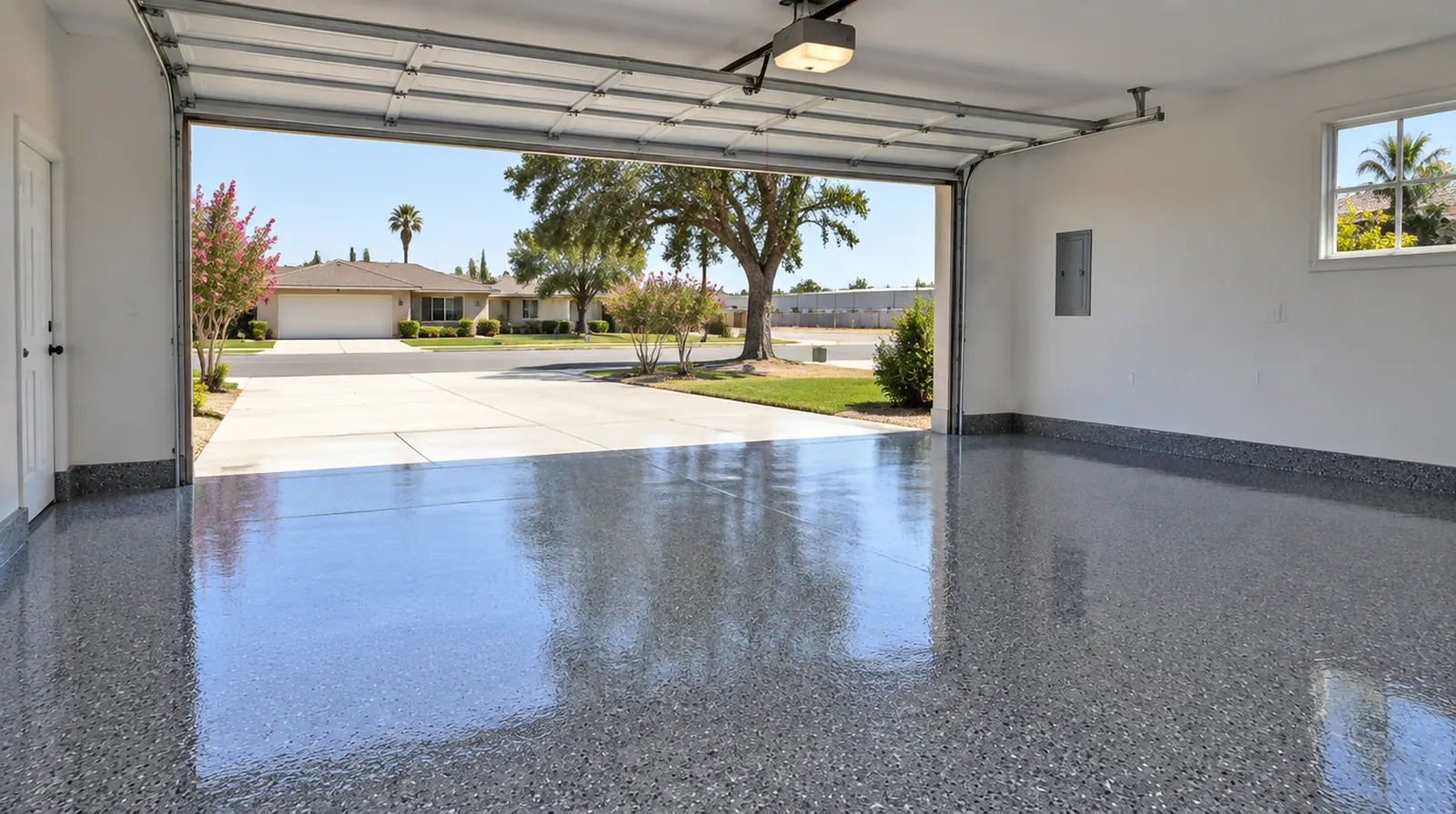
When the coating is failing broadly, we grind it all off down to clean concrete, repair the slab and install a new system designed for heat and moisture.
Concrete repairs too
Many failing floors also have concrete damage. Clay soil movement creates cracks; freeze is rare here, but water and age cause spalling near doors. We fill cracks with semi-rigid polyurea, rebuild broken edges with epoxy mortar and level sunken areas where possible before coating.
Making it last this time
Every repair or replacement we do follows the same standards as a new floor: mechanical grinding, moisture testing, correct film thickness and a topcoat rated for heat and sun. We explain what went wrong with the old floor so you understand why the new one will be different.
Commercial repairs
In shops and warehouses, damaged coatings create trip hazards and make cleaning harder. We repair worn traffic lanes, broken joints and chemical damage, often during off hours, and can recoat entire aisles to refresh worn striping.
DIY kit removal
Hardware store kits are the single biggest source of our repair work. The good news is that they are usually thin and come off easily with a grinder. Once removed, the slab can receive a professional system that actually lasts.
Questions
Can you match my existing floor?
We can often get close on solid colors and flake blends. Older floors that have yellowed or faded may need a full recoat to look uniform.
How long does a repair take?
Spot repairs and recoats often take a day. Full replacement takes one to three days.
Is it worth repairing or should I replace?
If less than about a fifth of the floor is failing and the rest is tightly bonded, repair is usually worth it. Otherwise, replacement saves money long term.
Get your floor evaluated
Send us photos or book a visit and we will tell you what is going on and how to fix it.
Get a repair assessment
Call (000) 000-0000 for a free estimate.