What polyaspartic is
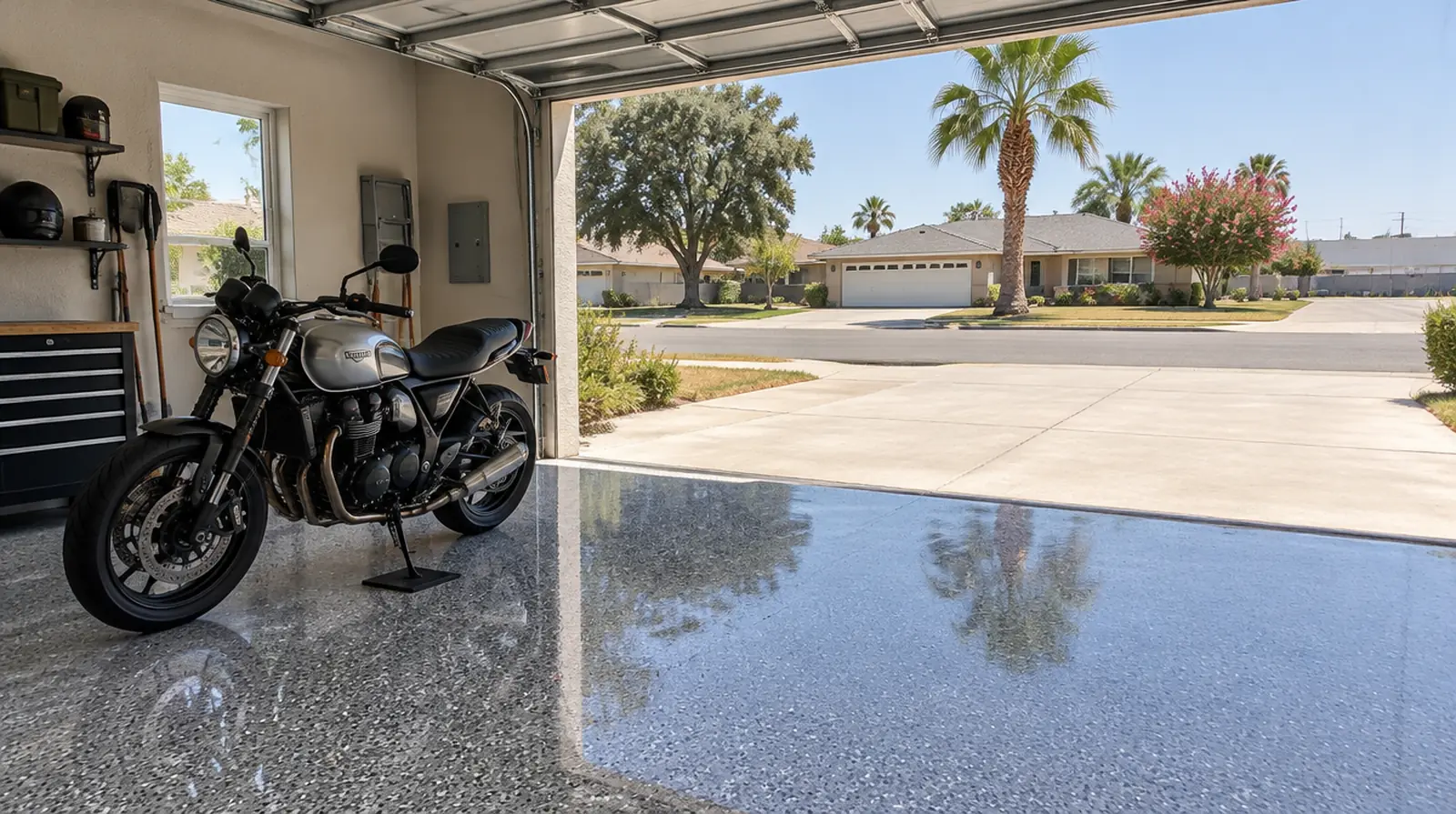
Polyaspartic is a type of aliphatic polyurea. It was developed for coating bridges and industrial equipment, and it has become one of the best materials for garage and patio floors. Compared with traditional epoxy, it cures faster, resists UV light far better, stays more flexible and handles a wider range of temperatures. Many of our garage systems use a polyaspartic topcoat even when the base is epoxy, because of how well it holds up.
Why it suits this climate
Long, cloudless summers are hard on floors that face the street. Every afternoon, low western sun streams through open garage doors and across covered patios. Standard epoxy yellows under that UV exposure, and over a few years a white or light gray floor can turn the color of weak tea near the door. Polyaspartic is UV stable. It stays clear and holds its color.
It also tolerates heat better. A floor that does not soften when a hot car rolls in is far less likely to suffer tire pickup. And because polyaspartic is a bit more flexible than epoxy, it handles the slight seasonal movement of slabs sitting on expansive clay without cracking as readily.
The one-day garage
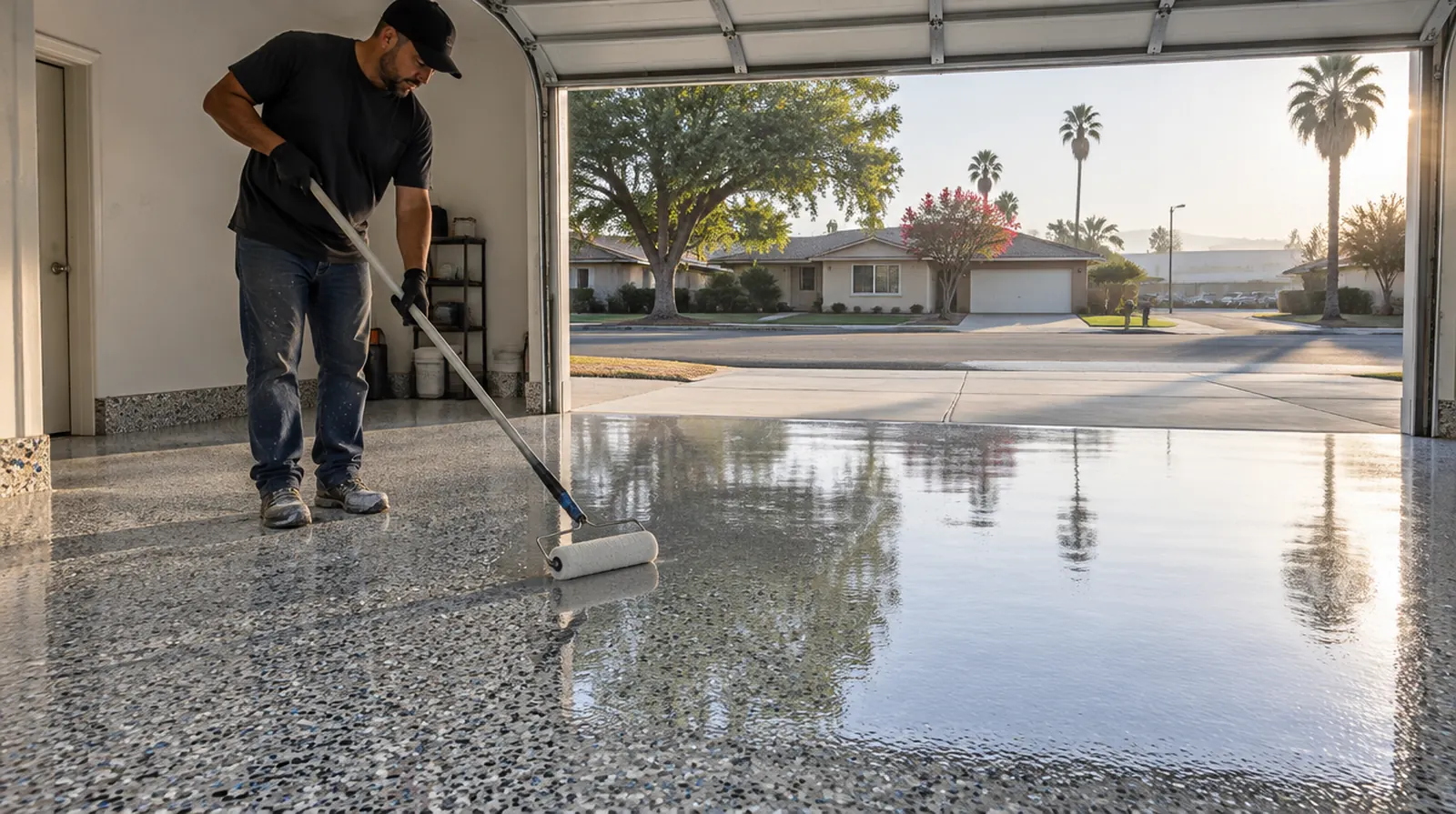
The fastest benefit is turnaround time. With a full polyaspartic system, we can grind, repair, base coat, broadcast flake, scrape and topcoat in a single long day. You can usually walk on the floor that evening and park on it within about 24 hours. For families who need the garage for daily parking, or businesses that cannot close for long, that speed is a big deal.
Installation details
Prep still comes first
Fast curing does not mean shortcuts. We diamond grind, vacuum, and repair cracks exactly as we would for any system. Polyaspartic bonds very well to properly profiled concrete.
Working fast
Polyaspartic has a short pot life, especially in hot weather. Our crews mix small batches and work in a planned sequence so every section blends seamlessly. In summer we start very early, before the slab heats up.
Flake or solid
Most clients choose a flake broadcast with a clear polyaspartic topcoat. Solid pigmented polyaspartic floors are also available for a clean, uniform look.
Texture
We can adjust grip by adding aggregate to the final coat, which is especially useful on covered patios, entries and laundry areas.
Where we use it
- Garages that see daily parking and afternoon sun.
- Covered patios and outdoor kitchens.
- Pool-side cabanas and pool equipment rooms.
- Commercial entries and showrooms with big windows.
- Home gyms and workshops that cannot sit idle for several days.
Comparing costs
Polyaspartic materials cost more per gallon than epoxy, and the fast working time demands experienced installers. On the other hand, the system often needs fewer days of labor and lasts longer without yellowing. Over the life of the floor, many owners find it the better value.
Caring for a polyaspartic floor
Sweep or blow out grit weekly. Mop with mild soap and water. Clean up oil and chemical spills promptly. Use kickstand pads and furniture pads to prevent point damage. A quick annual inspection lets us touch up any chips before they spread.
Frequently asked
Is polyaspartic better than epoxy?
For sun exposure, heat and speed, yes. For thick self-leveling industrial floors and metallic effects, epoxy still has advantages. Many of our floors combine both.
Can it go outdoors?
Yes, on covered patios and some uncovered surfaces. We evaluate each area because uncovered slabs face direct heat and moisture from irrigation.
Does it smell?
Some polyaspartic products have a noticeable odor during application that dissipates within hours. We ventilate and can use low-odor formulas.
Book a one-day floor
Ask about our single-day garage systems. Schedule a free estimate and we will confirm whether your slab is a good fit.
Ask about one-day floors
Call (000) 000-0000 for a free estimate.