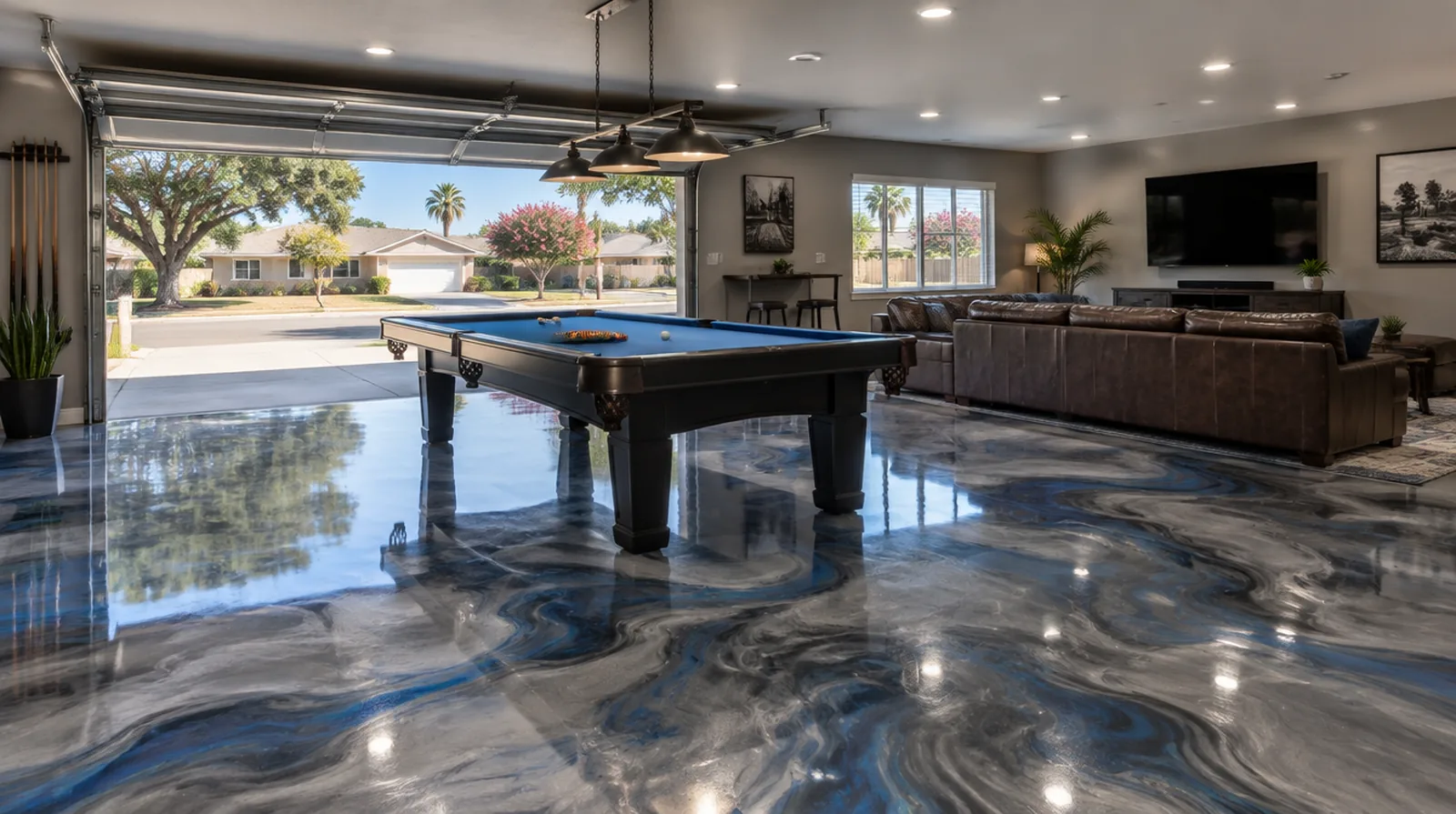
What makes a metallic floor different
Metallic epoxy uses fine mica-based pigments suspended in clear resin. While the resin is wet, the pigments can be moved with rollers, brushes, trowels and air blowers, and they settle into ripples, veins and clouds. Light bouncing off the pigment particles gives the floor a three-dimensional look, like liquid metal, polished stone or the surface of a lake. No two floors are ever the same.
Because each floor is made by hand, the person doing the pour matters as much as the product. We plan the look with you in advance, use sample boards to settle on colors and technique, and then work the floor in a single continuous session so the patterns flow from wall to wall.
Popular uses around town
Many homeowners here have converted part or all of a garage into a game room, home theater or gym, since it is often the coolest room in the house once insulated and air conditioned. A metallic floor makes that space feel finished and upscale without the cost of tile or hardwood. We also install metallic floors in:
- Barber shops, nail salons and boutiques that want a striking first impression.
- Car showrooms and detailing studios where vehicles look great on a reflective floor.
- Restaurants, bars and tasting rooms.
- Basements, bonus rooms and accessory dwelling units.
- Office lobbies and break rooms.
Choosing colors
Silver and charcoal combinations look modern and pair with gray cabinets and black fixtures. Bronze, copper and gold tones feel warm and suit Mediterranean or rustic interiors. Blues and teals evoke water and look especially good in game rooms. We can combine up to three or four pigments in one floor. Bring us a cabinet door, a paint chip or a photo, and we will build sample boards around it.
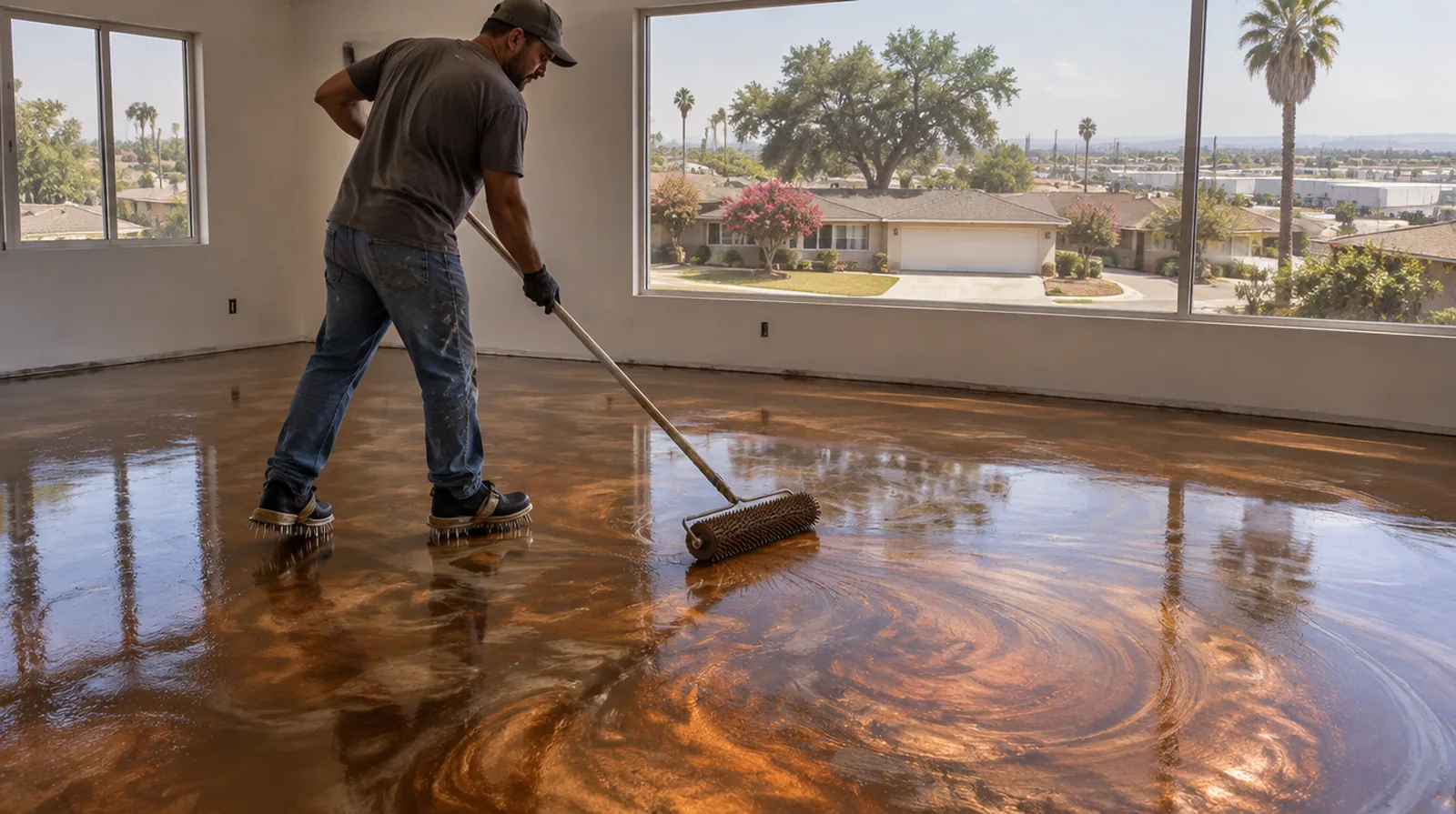
How we install metallic floors
Preparation
Metallic epoxy is self-leveling and shows every bump underneath. That means preparation has to be meticulous. We grind the slab, fill every crack and pit, and skim-coat where needed to create a flat base. Any clay-related heaving or uneven joints are addressed before the pour.
Primer and base
A primer seals the concrete and prevents outgassing bubbles. Then a tinted base coat goes down in a color that supports the metallic layer.
Metallic layer
We pour the metallic resin and manipulate it to create the agreed look. This stage is where the artistry comes in, and it has to happen within the working time of the material.
Protective topcoat
Metallic epoxies can scratch and yellow under strong sunlight, so we finish with a UV-stable urethane or polyaspartic topcoat. It protects the design and makes daily cleaning simple. We can choose a high-gloss or satin sheen.
Summer timing
Resin working time shortens dramatically as the temperature rises. On a hot afternoon a metallic batch can start to gel in minutes, leaving no time to shape it. We schedule metallic pours for early morning, run air conditioning in converted spaces where possible, and keep materials cool before mixing. These details help the pigments flow and settle properly.
Durability and care
A metallic floor with a quality topcoat is durable for home use and light commercial traffic. Use felt pads under furniture, sweep often to keep grit from scratching the surface and mop with a neutral cleaner. In very high-traffic commercial areas, we may recommend a periodic topcoat refresh every few years to keep the gloss consistent.
Questions people ask
Can a metallic floor go in a working garage?
Yes, with the right topcoat. Hot tires and dropped tools are harder on a metallic floor than a flake floor, so we discuss expectations honestly.
How slippery is it?
Glossy metallic floors can be slick when wet. We add a fine clear grit to the topcoat in kitchens, entries and anywhere water is likely.
How long does installation take?
Usually two to three days, including prep, pour and topcoat cure.
Start with samples
We will make sample boards in your colors so you can see them in your space. Contact us to begin planning your floor.
Plan a metallic floor
Call (000) 000-0000 for a free estimate.