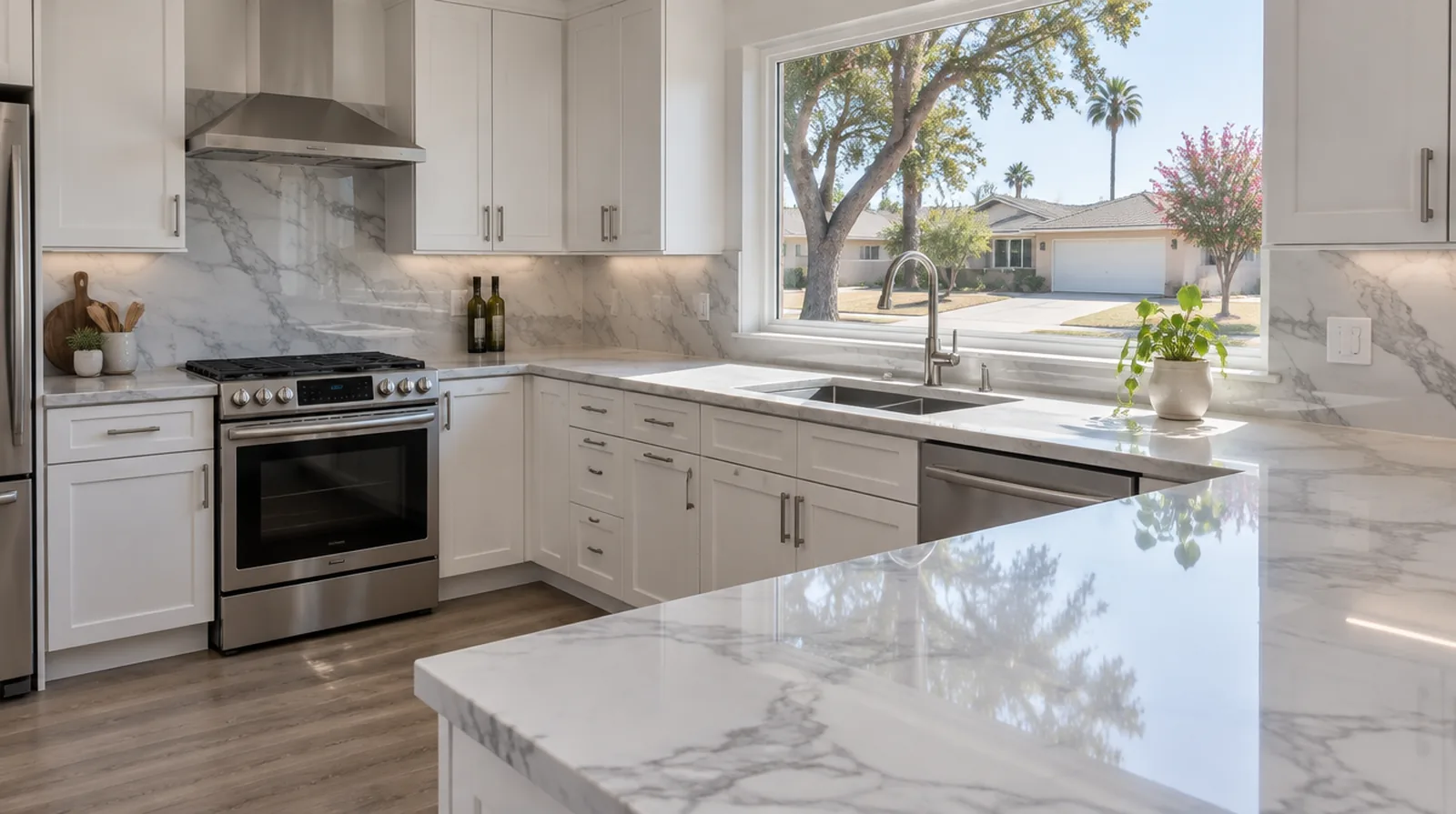
What epoxy countertops are
An epoxy countertop is a thick layer of clear and pigmented resin poured over an existing counter or a new substrate. As it levels, we create patterns that mimic marble, granite, quartz or abstract metallic designs. Once cured, it is seamless, glossy and waterproof. Because we pour over what you have, there is no tear-out, no heavy slabs to carry and no long wait for fabrication.
Why homeowners choose them
Many kitchens in older homes here still have their original tile or laminate counters, often with stained grout or chipped edges. Replacing them with stone can cost thousands and means demolition. An epoxy pour updates the look in a few days at a fraction of the price. It is also a good fit for rental properties, outdoor kitchens under a patio cover, home bars and laundry rooms.
Designs we create
- White marble with gray veins.
- Black or charcoal granite looks with metallic flecks.
- Warm cream and gold veining.
- Ocean-inspired blues and teals for bars.
- Solid colors for workbenches and craft tables.
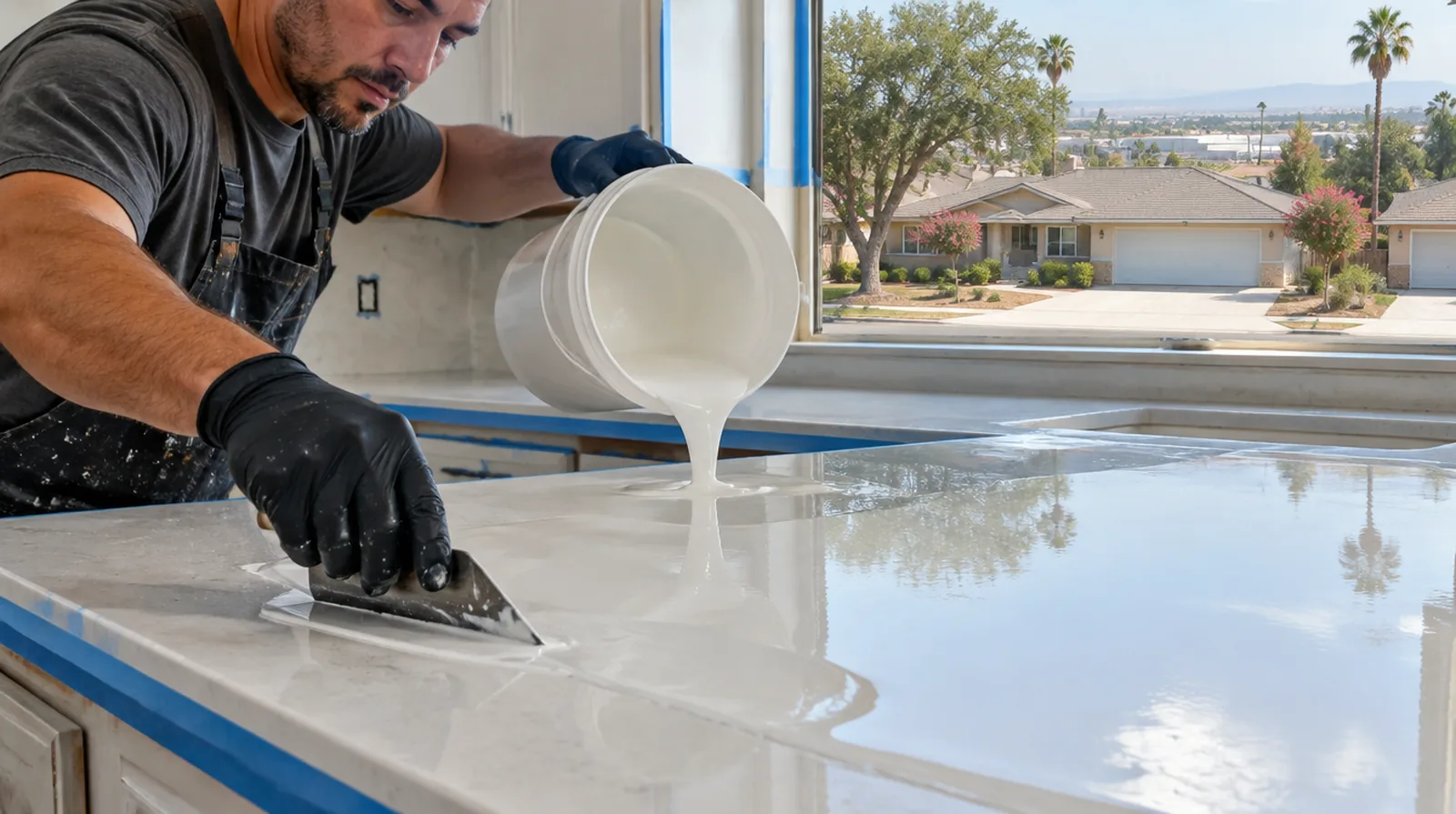
How we do it
Preparation
We protect cabinets, floors and appliances with plastic and tape. Existing counters are cleaned, sanded and repaired. Tile grout lines are filled and leveled. Sinks are either masked in place or temporarily removed.
Primer and base
A primer coat seals the surface, followed by a base color.
Design pour
We pour the main resin layer and work in veining, colors and effects. Edges get special attention so drips cure into a smooth rounded or square finish.
Clear coat
A final clear coat adds depth and protection. We use UV-stable resin where sunlight hits the counter.
Working in summer heat
Resin cures faster in heat, which shortens working time for detailed designs. In summer, we keep the house air conditioned during the pour and store materials somewhere cool beforehand.
Durability and care
Epoxy counters resist water and most household stains. They can scratch with knives, so use cutting boards. Hot pans should go on trivets, since epoxy can soften with direct high heat. Clean with mild soap and water and avoid abrasive pads.
Outdoor kitchens
Covered outdoor kitchens are common in local backyards. We use UV-stable formulas outdoors and recommend shading surfaces from direct afternoon sun.
Questions
How long does it take?
Usually two to three days, with light use after another day or two.
Can it go over tile?
Yes, once grout lines are filled and leveled.
Is it food safe?
Fully cured epoxy is generally considered safe for incidental food contact. Use cutting boards for prep.
See samples
Contact us to see design samples and get a quote.
Garage and shop workbenches
Not every pour is for a kitchen. Hobbyists and tradespeople ask us to coat plywood workbenches, reloading benches, potting tables and craft desks. A solid-color or clear epoxy top resists glue, paint, oil and solvents far better than raw wood, and it wipes clean at the end of a project. We can embed rulers, logos you supply or decorative items in a clear layer for a personal touch.
Bathroom vanities
Older bathrooms often have cultured marble tops that have yellowed or cracked near the faucet. An epoxy pour covers the old surface with a seamless new top. Without grout lines, there are fewer places for soap scum and mildew to collect, and the backsplash can be poured to match so the whole vanity looks unified. Most vanity jobs are finished within two days.
Get a countertop quote
Call (000) 000-0000 for a free estimate.