What polished concrete is
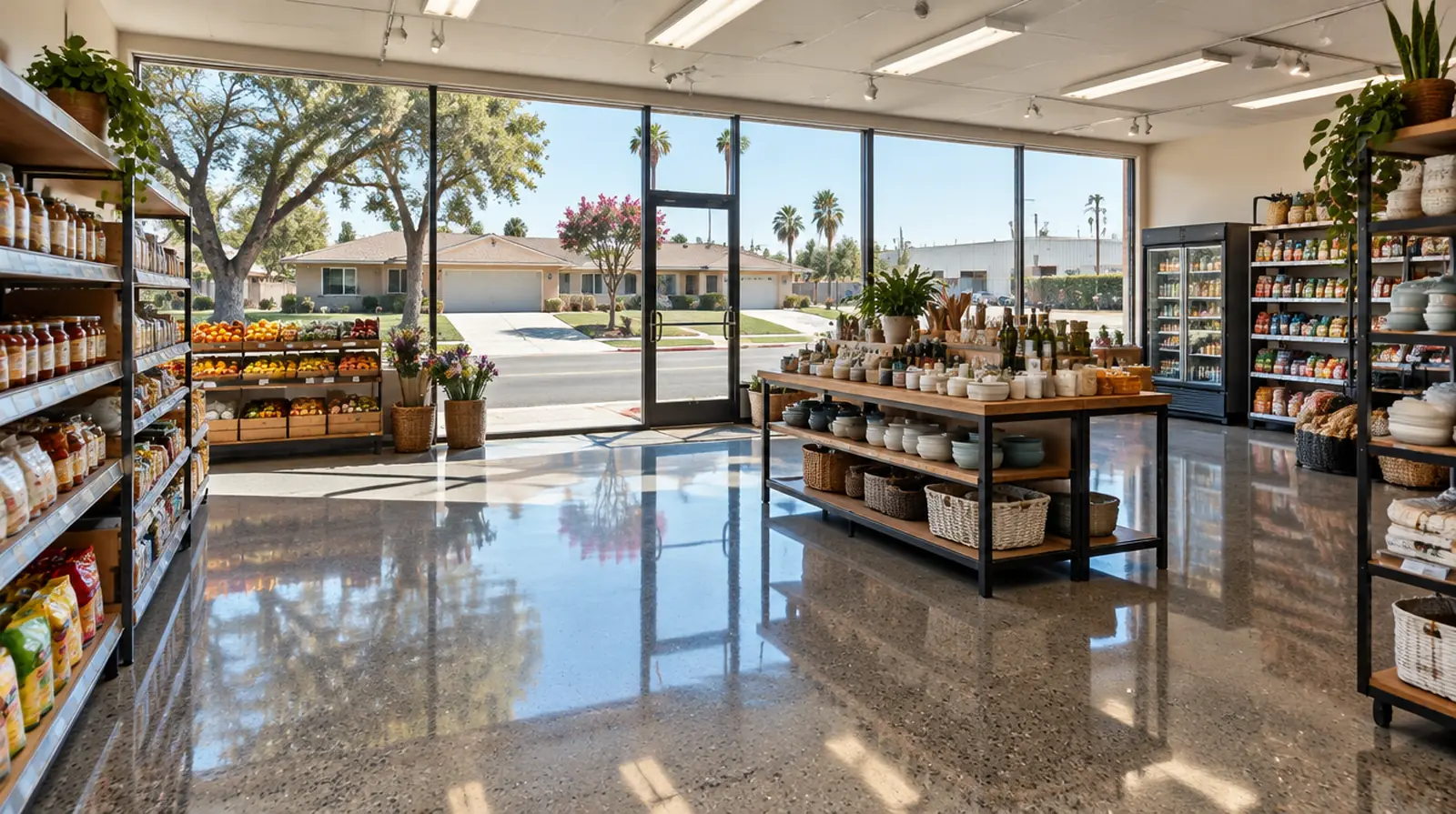
Polished concrete is not a coating. It is the slab itself, ground flat with progressively finer diamond tools, hardened with a chemical densifier and polished to a sheen ranging from satin to mirror gloss. Because nothing sits on top, there is nothing to peel, chip or delaminate. The surface becomes harder, denser and more resistant to dusting and staining.
Who it is for
Polished floors are common in big-box stores, grocery stores, auto dealerships and warehouses because they cost little to maintain over decades. They are equally at home in offices, restaurants, gyms and breweries. In homes, polished concrete suits modern remodels, accessory dwelling units, converted garages and new builds with radiant heat. It also stays cool underfoot, which is a real comfort in a hot valley summer.
Choosing the look
Exposure
How deeply we grind determines how much aggregate shows. Cream finish shows little to no stone. Salt-and-pepper reveals fine sand. Full exposure shows the larger stones for a terrazzo-like effect.
Sheen
Satin finishes are subtle and hide wear. High gloss reflects light dramatically and makes spaces feel larger and brighter.
Color
Dyes and stains add earth tones, grays or bold color. Scoring lines and borders can create patterns or define areas.
Our process
Assessment
We check the slab for coatings, adhesives, cracks, flatness and hardness. Older slabs in the area may have tile mastic, carpet glue or paint that has to be removed.
Grinding
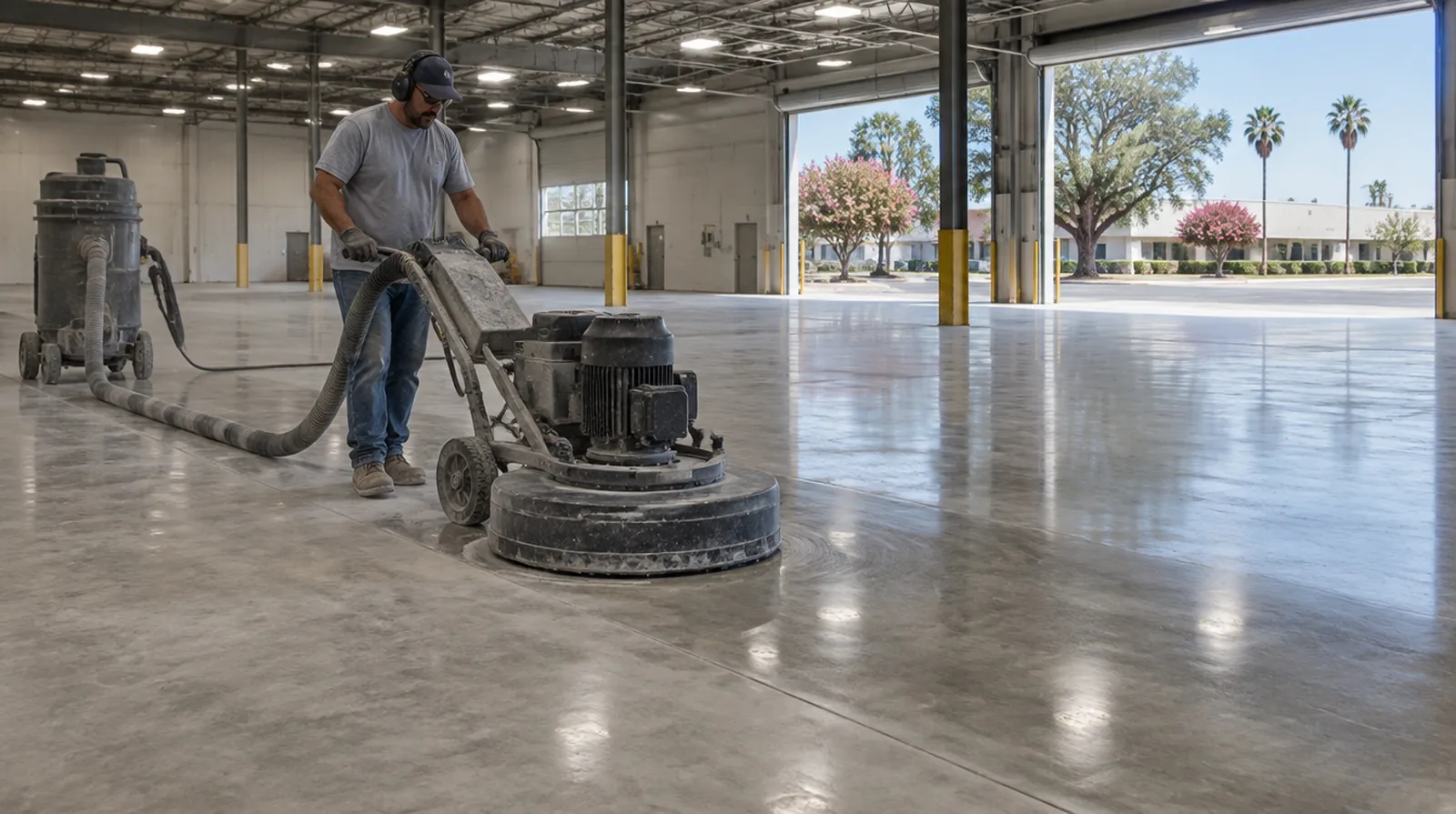
Metal-bond diamonds remove the top layer and level the surface. We patch cracks and holes with color-matched fillers.
Densifying
A lithium or silicate densifier penetrates the concrete and reacts to harden it from within.
Polishing
Resin-bond diamonds refine the surface in steps until it reaches the chosen sheen.
Guard
A penetrating stain guard adds resistance to oil, wine and coffee.
Polished concrete versus coatings
Polished concrete wins for very large areas, light-reflecting retail spaces and owners who want minimal upkeep. Coatings like epoxy win where chemicals, standing water, color uniformity or hiding a poor slab are priorities. For heavily stained, cracked or soft slabs, a coating may be the better answer. We will tell you which approach makes sense.
Garage conversions and additions
A lot of local families are turning garages into living space or building backyard cottages. The existing slab can often be polished into the finished floor, saving the cost of tile or laminate and avoiding moisture issues that cause wood flooring to cup. Old oil stains and patches add character in a polished floor, though we can minimize them with deeper grinding or dyes.
Maintenance
Dust mop daily in commercial spaces, and auto-scrub with a pH-neutral cleaner. At home, sweep and damp mop. Occasional burnishing restores shine. Unlike coatings, polished concrete never needs stripping and waxing.
Questions
Will it be slippery?
Polished concrete meets common slip-resistance standards when dry and clean. Spills should be wiped up, as with any smooth floor.
Can every slab be polished?
Most can. Very soft or badly damaged slabs may need an overlay or a coating instead.
How long does it last?
Decades, with periodic maintenance polishing.
Talk with us
We can grind a small test area so you can see the finish. Request a free estimate.
Cooler rooms in summer
Concrete has high thermal mass. In a well-insulated room, a polished slab absorbs heat slowly and stays pleasantly cool through hot afternoons, then releases warmth in the evening. Paired with light-colored dyes and good shading, it can trim cooling costs a little and feels much nicer underfoot than carpet in July.
Get a polishing quote
Call (000) 000-0000 for a free estimate.